It is 3:30 in the morning. It’s 27 degrees in your room. You’ve flipped your pillow about ten times, pushed the sheets away, and your mind is racing.
When exhaustion finally takes over around 4:30, your body collapses into a heavy, almost comatose sleep.
Then, at 7:00, time to get up for work... nothing. You don’t hear your alarm. Or worse, you turn it off in a state of total sleepwalking before falling back asleep. You wake up with a start at 8:15, sweating, late, and with a crushing “hangover” feeling.
If this scenario feels familiar as soon as the first heat waves of May arrive, you’re not alone. It’s not a lack of discipline. It’s a temporary neurobiological failure, and your smartphone is the main accomplice.
The Anatomy of a "Thermal Hangover"
To enter restorative sleep, your body’s internal temperature must drop. During periods of intense heat, this thermoregulation is hindered. You spend the night in light, restless sleep.
But when the room temperature finally drops slightly in the early morning, your brain, deprived of rest, “crashes.” It frantically plunges into a very deep sleep cycle (stage 3) to try to recover. At this exact moment, your auditory tolerance threshold drastically increases.
Your brain literally disconnects your ears to protect the little deep sleep it managed to capture. That’s why an alarm that wakes you instantly in winter becomes just an ineffective “background noise” in summer.
The Double Danger of the "Max Volume" Alarm
The classic reaction to counter this phenomenon is toxic: setting 5 consecutive alarms and turning the volume up to 100%.
-
Cardiovascular aggression: When the sound finally breaks through your heavy sleep, it doesn’t wake you up, it makes you jump. This adrenaline spike combined with the ambient heat causes palpitations and cold sweats in the morning.
-
Marital torment: With the heat, couple irritability is already at its peak. Imposing a screaming siren on your partner—who also slept poorly—is the surest way to start the day with conflict.
Wake-up by Conduction: The Safety of Summer Nights
If sound no longer works when you’re exhausted, which sense should you use? Touch.
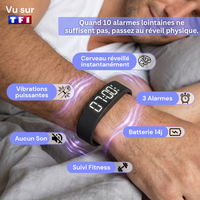
Haptic technology (vibration on the skin) has been used for years by biohackers and professionals with extreme schedules. The mechanoreceptors in your wrist never “sleep.” A firm, rhythmic vibratory pulse communicates directly with your brainstem.
It’s a physical presence signal, impossible to ignore, even in the deepest sleep. You wake up on time, to the exact minute, without any noise in the room.
The "Zero Wave" Advantage Under 30 Degrees
There is one last major mistake to correct this summer: keeping your smartphone on the nightstand. A phone charging or connected to Wi-Fi/4G emits residual heat and electromagnetic fields that keep the nervous system on alert. In the heat, your brain needs an absolute sanctuary, not a relay antenna 30 centimeters from its head.
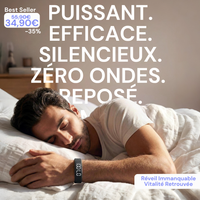
By choosing a 100% autonomous and disconnected alarm bracelet (permanent airplane mode), you eliminate electromagnetic pollution and phone heat from your sleeping space.
Don’t Let the Weather Dictate Your Schedule Anymore
Hot nights no longer have to mean anxiety about the next day. Replace noise with the certainty of vibration, and turn your summer mornings into moments under control.
So you never miss your alarms again
Discover the vibrating alarm bracelet that wakes you up and gets you out of bed for sure!

PulseOn Rise - Change your mornings
Ready to get up on time, even after a sleepless night? Discover PulseOn Rise. The minimalist alarm bracelet, wave-free and silent, designed for heavy sleepers and those who demand perfect mornings, no matter the night’s temperature.