This weekend, the verdict is in: we will sleep less. With the switch to daylight saving time, a whole hour will vanish from our night.
Immediately, panic sets in. How will we face Monday morning? Should we go to bed at 8 p.m. on Sunday night?
The truth is, most usual advice is fighting the wrong battle. The problem isn’t just the lost hour. The real physiological danger is how you force your body to wake up while your circadian rhythm is still set to standard time.
Here’s what sleep experts know, and why the key lies not in duration, but in the mechanics of your awakening.
Why the switch to daylight saving time is a trauma for the brain
When you know you’ll sleep less, every minute of recovery counts. Yet on Monday morning, 85% of us will make the worst possible mistake for our nervous system.
At 7:00 a.m. (which will actually be 6:00 a.m. for your body), your smartphone will trigger its alarm sound. This harsh auditory stimulus causes:
-
A massive cortisol surge: The stress hormone floods your bloodstream to force you to open your eyes.
-
Sleep inertia syndrome: Being abruptly pulled from a deep sleep cycle plunges the brain into a cognitive fog that can last up to 4 hours.
-
A morning arrhythmia: Your heart rate artificially speeds up.
You’re not just experiencing the time change. You’re suffering the assault of your own alarm.
We will sleep less: 3 rules to improve your sleep quality
To counter this time debt, the goal is to optimize every phase of your night. Here’s how to maximize a shorter night.
1. The "Zero Wave" nighttime rule
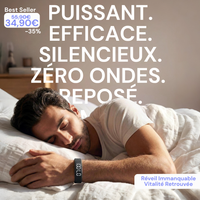
For your brain to reach restorative sleep phases (REM and deep sleep) faster, it must be immersed in a neutral environment. The smartphone on the bedside table, with its Wi-Fi and Bluetooth communicating in the background, keeps the nervous system in a state of hypervigilance. The solution? Ban it from the bedroom.
2. Respect the bedroom temperature
A shorter night demands quick sleep onset. Keep your bedroom between 16°C and 18°C. A lower temperature signals the body to secrete melatonin, easing the transition to deep sleep.
3. Replace the sound shock with haptic technology
This is the best-kept secret of biohackers and high-performing early risers. If sleep time is reduced, the wake-up must be absolutely gentle.
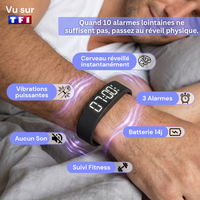
Replacing the phone ringtone with a silent vibration directly on the skin changes the whole equation:
-
The brain is taken out of its natural cycles without any stress spike.
-
You wake up at your own pace, without the "hangover" effect of sleep.
-
You don’t wake your partner, who more than ever needs those precious remaining minutes of sleep.
So you never miss your alarms again
Discover the vibrating alarm bracelet that wakes you up and gets you out of bed for sure!

PulseOn Rise - Change your mornings
Take back control of your mornings
The time change doesn’t have to mean exhaustion. By eliminating waves from your bedroom and replacing the harsh sound alarm with technology that respects your biology, you turn a constraint into an advantage.
Less sleep simply requires a better wake-up tool.
Ready to switch to daylight saving time without suffering fatigue and to rediscover peaceful mornings? > Secure your circadian rhythm. Discover , the 100% offline vibrating wake-up bracelet that revolutionizes the quality of your mornings, even when nights are short.